Sunday, 31 January 2016

Implementing the Lisbon Treaty: Improving the Functioning of the EU on Justice and Home Affairs (CEPS)

This study examines the functioning of EU Justice and Home Affairs cooperation in light of the reforms and innovations introduced by the Lisbon Treaty since the end of 2009. It identifies the main challenges and deficits characterising the practical and effective implementation of these transformations and suggests specific ways for the European Parliament to address them. The study recommends that any future legislative reform or Treaty change should not promote or enable further differentiation in subsequent generations of EU AFSJ cooperation. Nor should it permit restricting or ‘lowering’ existing EU rights and freedoms enjoyed by European citizens and residents in EU JHA law. The Parliament should give priority to devising a mutual trust-building agenda for EU AFSJ cooperation based on three main policy actions focused on improving and strengthening: First, implementation and evaluation; Second, accountability, transparency and fundamental rights and third, the rule of law and fundamental rights.
Sergio Carrera is Senior Research Fellow and Head of the Justice and Home Affairs unit at CEPS and Associate Professor, Faculty of Law, University of Maastricht. Elspeth Guild is Senior Associate Research Fellow at CEPS and Jean Monnet Professor ad personam of European Immigration Law at Radboud University Nijmegen and Queen Mary, University of London.
This study was commissioned by the Policy Department for Citizen's Rights and Constitutional Affairs at the request of the AFCO Committee of the European Parliament and can also be downloaded from the Parliament’s website

Is the Thai Junta’s support network starting to fray? (Thitinan Pongsudhirak, East Asia Forum)

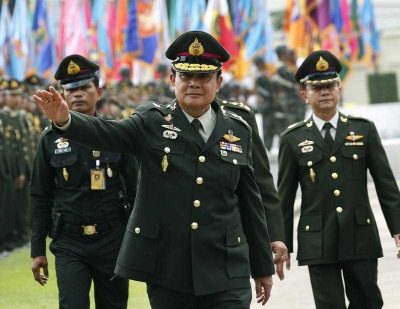
No country in Southeast Asia shoots itself in the foot more than Thailand. With so much going for it, the second-largest economy in the region still manages to underperform spectacularly. Its growth trajectory is in the 2–3 per cent range even though it has the potential to track twice that figure. Two decades after it was considered to be a consolidating democracy, Thailand is now led by outright military-authoritarian rule. In much of the region there will be considerable good news in 2016, but in Thailand good news seems hard to find.
There is little agreement in Thailand on who is to blame for its political derailment and prolonged social malaise. A better question is how to get back on track and how to move forward. But here lies Thailand’s knotty conundrum.
The military government of Prime Minister Prayuth Chan-ocha is stuck between a rock and a hard place of its own creation. It feels compelled to stay in power until it believes that Thailand can function as a workable democracy. But disagreements between groups supporting the coup are themselves prolonging the road to recovery and the interregnum may still be indefinite.
Since the military seized power in May 2014, the pro-coup coalition has been characterised by instability and political stagnation. The coup was staged on the pretext of cleaning up corruption and instituting reforms to remake the country into a disciplined democracy underpinned by traditional values and institutions. To do so, a charter-drafting process has been set up to rewrite rules and to reinstate checks-and-balance mechanisms. Yet as the junta-appointed government approaches two years in office, what once tied its support base together has begun to fray.
Among the first in the pro-coup camp to show dissatisfaction was the Democrat Party, the main opposition party that railed against the previous elected government both in parliament and in the streets. After performing much of the heavy lifting to oust the government of Yingluck Shinawatra from October 2013 until the coup, the street-based Democrat faction known as the People’s Democratic Reform Committee (PDRC) probably did not foresee a long-term military dictatorship. But the PDRC is holding its tongue for now.
The same cannot be said for other Democrat Party members who want to regain electoral power and who have become more vocal against military rule. Still, while the divided Democrats should not be written off, their leadership is mired in controversy behind the scenes and is bereft of policy ideas.
Civil society activists who supported the coup also seem to be having second thoughts. They most likely did not anticipate renewed abuse and repression under military rule, including human rights violations and a lack of government accountability. Many members of Thai civil society were conservative when facing the Shinawatra clan in government but are becoming more progressive now that the military government seems to have entrenched itself in government for the long haul. If circumstances shift and the military government is no longer in favour, civil society may pile on the pressure as they have done against military dictatorships in the past.
Bureaucratic support for the coup is wavering too. Some bureaucrats continue to rationalise why the military government is necessary to get rid of corruption and straighten out Thailand. But others are foot-dragging and hedging their bets in light of government uncertainty.
The game-changer for Thai politics in 2016 and beyond may be the position of big business. So far key business people have been supportive of the coup and the government. But sustained economic doldrums and mounting international pressure may prompt them to change direction should the opportunity arise.
Despite all this the army’s backing of the current government is still strong. This is remarkable considering the Thai army is controlled by a small band of brothers from one regimental unit.
More predictable is the reaction of the varied anti-coup coalition, which covers the Shinawatra governments’ Pheu Thai party and the ‘red shirts’ of the United Front for Democracy Against Dictatorship. Continued military repression and charges of malfeasance against Yingluck over her government’s rice-pledging policy — where Yingluck sought to increase the market price for rice in a bid to win the support of paddy farmers — will aggravate these groups. But loud noises from the anti-coup camp are unlikely to destabilise the military government unless relations within the pro-coup coalition disintegrate further. Anti-coup liberals in Thailand will only face more repression the more they push for change.
General Prayuth’s military government and command of the armed forces are still firm. But those at the top in government will find that the going will get tougher in 2016. The more the military government settles in, the more backers of the 2014 coup will reconsider their support.
Thitinan Pongsudhirak is an Associate Professor and Director of the Institute of Security and International Studies at the Faculty of Political Science, Chulalongkorn University.

A K-Pop Star, a Flag, and a Political Imbroglio (Jenna Gibson, The Diplomat)

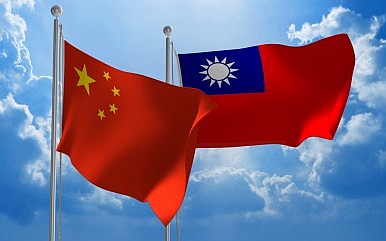
It all started with a flag. Chou Tzuyu, a 16-year-old member of the rookie K-pop girl group Twice, appeared on an online show called “My Little Television“ with her bandmates. During the show, three of the girls, who are from Japan, were seen waving a Korean flag along with a Japanese flag to show their nationality. At the same time, Tzuyu was waving a Korean flag together with the flag of the Republic of China (Taiwan).
On January 8, shortly after the segment aired, famous Taiwanese singer Huang An took to Weibo, accusing the girl of being an independence supporter. Huang, who opposes Taiwanese independence, later deleted all messages and photos from his account, but the damage had been done.
Huawei suspended their partnership with Tzuyu, who had been a spokesperson for their Huawei Y6 phone in Korea through a domestic company. In the meantime, JYP, the entertainment company behind Twice, has seen a “Boycott JYP” campaign rack up tens of millions of hits, and the company’s stock has experienced a 5 percent dip.
In an effort to quell the controversy, JYP announced its singers would not attend any Chinese New Year broadcasts, and that Twice’s activities in China would be indefinitely suspended. “JYP is a company in the cultural business, not a company with a political position. Considering Tzuyu is only 16 years old and her education, she is not at the age where she can act with a political motive,” the company posted on Weibo. “Because people are saying we are hostile toward China, our partners in China are experiencing difficulty with work related business and duties. Until the truth is revealed, we will halt Chinese activities.”
Two days later, JYP uploaded a video on its YouTube channel showing Tzuyu in a plain black turtleneck, somberly reading from a prepared text in Chinese. “There is only one China… I have always felt proud of being Chinese,” she read, saying she had “hurt the company and the feelings of netizens on both sides of the Taiwan Strait due to my inappropriate words and actions during activities abroad. I feel very, very sorry and guilty” and bowing deeply. The company even went so far as to edit the group’s website, changing Tzuyu’s biography from “Nationality: Taiwanese” to “Birthplace: Taiwan” and then again to “Birthplace: China, Taiwan” (the company’s site is still down after allegedly being hacked during the controversy).
But rather than dampening the controversy, these responses only served to anger the Taiwanese public, who started rallying behind the singer and condemning the company that forced her to apologize for her nationality.
The backlash in Taiwan gained so much momentum, even Taiwanese presidential candidates showed their support in the last few days of the election. In her victory speech on January 16, president-elect Tsing Ing-wenreferred to the issue, saying, “This particular incident will serve as a constant reminder to me about the importance of our country’s strength and unity to those outside our borders. This will be one of the most important responsibilities for me as the next president of the Republic of China.”
Meanwhile, Taiwanese human rights lawyer George Wang filed a lawsuit against both Huang An, Tzuyu’s original accuser, and JYP, saying that they pressured the girl to apologize for something she shouldn’t have to apologize for – her nationality.
For years, South Korea has proudly touted the international success of its music industry. There is even a term coined to describe the popularity of Korean pop culture abroad – Hallyu, or “Korean Wave.” In recent years, Korean entertainment companies have tried to build on this success with localization techniques – releasing albums in different languages and recruiting stars from different countries to be part of ultra-popular girl groups and boy bands. But when pop stars cross borders, they’re bound to run into some sensitivities.
Tzuyu is not the first star to become tangled in a diplomatic controversy. In 2012, singer/actor Choi Siwon retweeted a post from the Blue House that read, “Dokdo is our true territory and it is a place of value that must be protected with our lives. Let’s protect it with pride – at Dokdo,” causing a significant backlash from Japanese netizens. In a similar vein, actress Kim Tae-Hee sparked outrage in Japan when she was cast in a Japanese soap opera in 2011, despite having served as an activist for the Dokdo movement in Korea in the past.
This is not a phenomenon unique to K-pop: Katy Perry became embroiled in a very similar controversy in 2015 when she wore a Republic of China flag as a cape while on stage in Taipei. And actress Kristin Stewart raised eyebrows when she arrived at Incheon Airport in Korea wearing a shirt emblazoned with the rising sun symbol.
Despite these setbacks, however, Hallyu is still credited with creating a positive image of Korea around the world. Fans of Korean pop culture are credited with a huge boom in tourism over the past decade, and the Korea Foundation for International Culture Exchange estimated in 2010 that the economic benefits from the surge in Korean pop exports was 5 trillion won (about $4.3 billion), with fans buying clothing, makeup, and even food because of their favorite stars.
But with this success, the risk of a backlash rises. Especially with this new localization trend, Korean entertainment companies need to be aware of the potential pitfalls their stars may encounter. The key is to be one step ahead and train their stars – young as they may be – to avoid causing offense. And, perhaps more importantly, the company must be prepared to react when they run into such disputes. In this case, coming as it did right before major elections in Taiwan, the controversy was likely more about cross-strait politics than about a 16-year-old singer. But that doesn’t mean this confrontation was inevitable.
“The world is getting smaller and smaller. There are many foreign entertainers active in Korea now and the hallyu market has expanded in size, around the globe,” said culture critic Bae Kook-nam told The Korea Times. “Not studying enough about world history and culture has caused such a big controversy. It should not end here and the entertainment industry needs to study the culture and emotions of where hallyu is popular.”
Jenna Gibson is the Director of Communications at The Korea Economic Institute of America. She runs KEI’s media relations and outreach along with managing KEI’s online presence. Follow Jenna on Twitter at @jennargibson.

A K-Pop Star, a Flag, and a Political Imbroglio

Incentivizing Multilateralism in the South China Sea (Kailash K Prasad, The Diplomat)

Considering the multiple overlapping claims in the South China Sea, bilateral talks alone cannot yield a lasting solution. However, engaging in more inclusive dialogue will prove difficult for as long China – whose claims in these waters bring it into conflict with all the other claimants – remains averse to multilateral talks.
Part of the aversion likely stems from Beijing’s growing confidence in the People’s Liberation Army Navy’s strength relative to its maritime neighbors. With this perceived advantage, rather than multilateral talks – which could give China worse odds of getting all of what it claims in the region – Beijing seems confident that maintaining a preference for bilateral talks, while engaging in incremental island reclamation, more frequent patrols, as well as something occasionally more dramatic, will prove the more effective strategy, eventually forcing the other claimants to reconsider what they are willing to stake to realize their interests in the SCS.
However, with Vietnam, the Philippines, Malaysia and even non-claimant states like Indonesia and Singapore fast upgrading their navies, while building closer ties with each other – as well as with the United States, Australia and India further away, China is likely to find its military advantage in these waters less clear cut. And rather than spooking the other claimants into conforming to its wishes, Beijing’s assertiveness in the SCS will more frequently provoke responses in kind.
For the countries involved in these disputes, for those further away, and perhaps most importantly, for the 500 million people who live within 100 miles of the SCS coastline, the prevailing status quo, which leaves plenty of room for potentially devastating miscalculation, is far from ideal. And in a tense environment, continued obstinacy towards multilateral talks will likely come at a high cost.
The good news however is that there are a few ways to make multilateral talks more appealing. Perhaps the most effective approach would be to raise the cost of using force by establishing a multinational naval coalition that would focus on ensuring freedom of navigation in the SCS. In doing so, this coalition will likely make China and the other claimants less confident of their military advantage in the region, rendering unilateral provocative actions far less appealing. Such a maritime coalition would probably be most effective if it included the U.S. Navy, and would be most legitimate if membership were extended to all those involved in the SCS disputes.
Of course, putting together a strong coalition that can deter any claimant from using force in the SCS will prove tricky, especially considering China’s interest in such a maritime force is far from clear. Fortunately, there are a few easier ways to incentivize multilateral talks.
One straightforward way would be to remind the PRC that it has engaged in multilateral talks in the not too distant past. In 2005, China, the Philippines and Vietnam signed a proposal to map seismic zones in the SCS. That the Chinese leadership has shown faith in multilateralism to explore the SCS provides much-needed ground to encourage further talks. And though more talks aimed at joint exploration alone might do little to resolve the thorny questions of sovereignty, they will provide a welcome opportunity for collective engagement and help build trust among the claimants.
It would also be useful to highlight China’s own aspirations for ocean-related industrial economic activities toaccount for 13 percent of its GDP by 2020. Being more open to multilateral negotiations could result in a more permissive maritime environment, making it easier for China to realize some of its economic goals in these waters.
Finally, if claimants like Vietnam, Brunei and the Philippines who are more inclined to multilateral talks can come together to discuss a solution, it could hasten the process of settlement. More than bringing about resolution by itself, coming together would convey a sense of urgency and resolve, which could make Beijing more amenable to inclusive dialogue – especially considering that by remaining aloof, China would risk taking a significant portion of the blame for the failure of multilateralism in the SCS.
However, far more than any of these measures, the success of multilateralism will depend on whether the six countries involved in these disputes recognize that control over the South China Sea at the cost of strategic hostility with each other, as well as with important economic partners further away, will prove a pyrrhic victory. Clearly, betting on such reasoning prevailing anytime soon would require a level of optimism that’s perhaps best kept out of statecraft. However, as tensions escalate, and the possibility of a wider conflict grows, it is perhaps a recognition of the costs of any conflict which, more than any other factor, could persuade the claimants to give multilateralism a chance. The worrying question then is this: Just how much worse will things have to get before multilateralism starts to look appealing in these waters?
Kailash K Prasad is a graduate student at the Fletcher School of Law and Diplomacy. He tweets at @ridersonthestrm

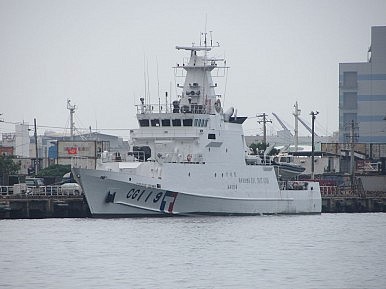
Incentivizing Multilateralism in the South China Sea

Return of the FONOP: US Navy Destroyer Asserts Freedom of Navigation in Paracel Islands (Ankit Panda, The Diplomat)

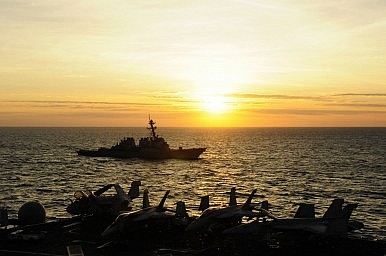
On Saturday, a U.S. Navy guided-missile destroyer, the USS Curtis Wilbur, sailed within 12 nautical miles of Triton Island in the disputed Paracel Islands in the South China Sea. Triton Island is claimed by China, Taiwan, and Vietnam, and is administered by China. TheCurtis Wilbur‘s passage near Triton Island marks the first freedom of navigation patrol in the South China Sea since the U.S. Navy sailed the USS Lassen within 12 nautical miles of Subi Reef in the Spratly Islands, marking 95 days between the two operations. Triton Island is not among the features where China has built artificial islands and constructed military and civilian features.
According to Captain Jeff Davis, a spokesperson for the Pentagon, no Chinese People’s Liberation Army-Navy (PLAN) vessels attempted to inhibit the Curtis Wilbur‘s passage unlike during the October freedom of navigation patrol in the Spratlys, when PLAN vessels escorted the Lassen out of the 12 nautical mile zone around Subi Reef. “This operation challenged attempts by the three claimants — China, Taiwan and Vietnam — to restrict navigation rights and freedoms,” Davis added.
Davis clarified that the latest freedom of navigation patrol was an “innocent passage,” intended to challenge policies by both China and Vietnam that require vessels transiting the 12 nautical mile territorial waters of features in the Paracels to first notify maritime authorities. The United States rejects prior notification and sees these waters as open for lawful navigation compliant with the 1982 United Nations Convention on the Law of Sea (UNCLOS). “No claimants were notified prior to the transit, which is consistent with our normal process and international law,” Davis added.
The Chinese foreign ministry protested the freedom of navigation patrol.  “The American warship has violated relevant Chinese laws by entering Chinese territorial waters without prior permission, and the Chinese side has taken relevant measures including monitoring and admonishments,” it said in a statement.  “We urge the US side to respect [and] abide by relevant Chinese laws, to do more things conducive to Sino-US mutual trust and regional peace and stability,” Chinese foreign ministry spokesperson Hua Chunying added in the statement.
Notably, the statement asserts that the Curtis Wilbur entered “Chinese territorial waters.” In October, after theLassen‘s freedom of navigation operation, the Chinese foreign ministry preserved a degree of ambiguity about its maritime claims in the Spratlys by noting that the Lassen‘s passage “threatened China’s sovereignty and security interests.” China has described its claims in the Spratlys as a “military alert zone” at times–a designation that has no particular meaning in international law.
Saturday’s freedom of navigation operation comes shortly after the heads of both the Chinese and U.S. navies consulted about unplanned encounters at sea between the two sides. Additionally, speaking last week, the commander of U.S. military forces in the Asia-Pacific, Admiral Harry Harris, said that U.S. freedom of navigation patrols would intensify and grow more complex this year. Saturday’s freedom of navigation operation remains consistent with the precedent set in October in that it challenges excessive claims by multiple claimants. October’s freedom of navigation drew attention for challenging Chinese claims near Subi Reef, where China has built an artificial island with military applications, but it also involved the Lassen transiting within 12 nautical miles of  Northeast Cay, Southwest Cay, South Reef, and Sandy Cay.

Return of the FONOP: US Navy Destroyer Asserts Freedom of Navigation in Paracel Islands

Friday, 29 January 2016

Philosophical diary, Historical judgment 29/01/2016 - In progress (Marco Emanuele)

To go beyond the dominant corruption of thinking we have to return to the world-of-life. We are imprisoned in a linear thinking that brings us to simplify and to separate; it's in this context that we theorise and adopt the principle of the clash of civilizations. We do not consider that life, and lifes, evolves in transitions and in informalities; considering so, we have to rethink our approach to what we are, recovering our complex and common nature. We need the patience of dialogue and of mediation to tend to a global integration of different people.


Diario filosofico - Giudizio storico 29/01/2016, In progress (Marco Emanuele)

La prima forma di corruzione è nel pensiero. Si tratta di una corruzione nel nostro approccio alla realtà che, nell'idea dominante e globalizzata, è "parallelo" ai mondi-della-vita, alle loro complessità, ai loro talenti e alle loro contraddizioni. Pratichiamo un pensiero corrotto come pensiero superficiale, distaccato dalle profondità di ciò che siamo, capace soltanto di generare "irrealtà" facendo degenerare la realtà.